
Friday, May 29, 2026
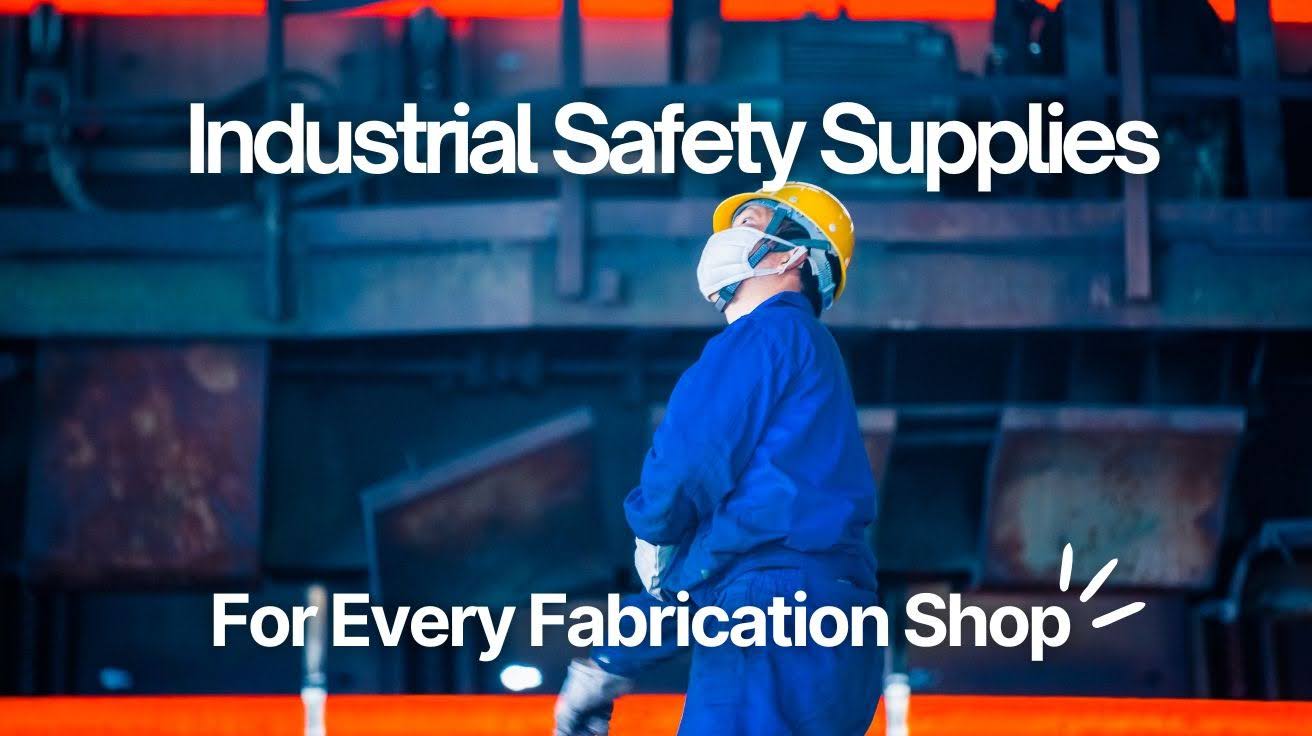
This guide covers the essential safety supplies every fabrication shop should have in place, how proper PPE reduces injuries and costly downtime, and how Maxwell Products Corp helps fabricators across Southeastern Pennsylvania source equipment matched to their specific operations.
Running a fabrication shop means managing serious hazards every day. Hot metal, grinding sparks, welding fumes, high-decibel noise, and heavy workpieces don't leave room for shortcuts. In the U.S., more than 16,000 workers are seriously injured and about 50 are killed each year in fabricated metal product manufacturing, highlighting why robust industrial safety supplies are non-negotiable in every fabrication shop. These numbers reflect ordinary operations in shops that look a great deal like yours.
The right Industrial PPE supplies close the gap between a normal day and an avoidable incident. If your shop's safety kit hasn't been reviewed recently, now is the right time. Browse our full safety range or contact Maxwell Products to discuss what your operation needs.
No two fabrication shops are identical, but certain categories of protection are non-negotiable across the board.
Grinding, cutting, and welding generate projectiles, UV radiation, and heat that cause permanent damage in a fraction of a second:
Hands are the most frequently injured body part in fabrication environments:
Steel-capped safety boots are a baseline. Beyond footwear:
Noise in fabrication shops regularly exceeds OSHA's 85 dB action level. Earplugs rated NRR 29 or higher, or earmuffs for longer exposure, should be available at every noisy workstation.
The business case is straightforward. Every lost-time injury costs a shop medical expenses, potential fines, and production days that don't come back. OSHA estimates employers pay $1 billion per week in workers' compensation costs across the U.S. industry, excluding indirect costs like retraining and rescheduling.
Quality PPE worn consistently reduces both frequency and severity of incidents. It also signals that the shop is run professionally, which affects morale, retention, and the willingness to follow safety procedures.
Cheap PPE fails on both counts. It breaks faster, fits worse, and gets discarded sooner. The shops we work with that invest in proper gear spend less overall, not more.
Get in touch with Maxwell Products to replace the substandard kit with equipment that holds up on the floor.
Respirators and safety glasses are the two PPE categories most frequently compromised through poor quality, poor fit, or inconsistent use.
A half-face respirator with the correct cartridge provides meaningful protection against welding fume and metal dust. A disposable dust mask does not. Key considerations:
Cheap lenses scratch quickly, reducing visibility and encouraging workers to remove them. Anti-scratch and anti-fog coatings on quality lenses maintain clarity across a full shift and last far longer.
OSHA's updated exposure limits for welding fumes, particularly hexavalent chromium from stainless steel welding, are the most significant recent development for fabrication shops. Current areas of regulatory focus:
Staying current requires an active relationship with a supplier who understands the regulatory landscape, not just the product catalogue. Maxwell Products has been working with fabricators across Southeastern Pennsylvania for years. Reach out to our team for guidance on keeping your safety programme current.
A fabrication shop that invests properly in industrial safety supplies runs more smoothly, retains better workers, and avoids the disruption serious incidents bring.
Maxwell Products Corp supplies safety equipment alongside industrial finishing solutions from our base in Southeastern Pennsylvania. Whether you need to restock consumables, upgrade your respiratory protection, or complete a full safety kit review, our team understands fabrication operations, not just the catalogue.
Browse safety supplies at Maxwell Products or call us to speak with a specialist about what your shop needs.
Eye protection, hand protection, foot protection, respiratory protection, and hearing protection are non-negotiable. Within each category, the specific product matters: a welding helmet is not a substitute for a grinding face shield, and a dust mask is not a substitute for a half-face respirator. Shops should assess hazards by workstation rather than applying a blanket PPE standard. Different tasks generate different risks, and a one-size approach is almost always a compromise somewhere.
Correctly specified PPE reduces both frequency and severity of incidents. Direct costs, medical treatment, compensation, and fines, are measurable, but indirect costs often exceed them: delays, overtime for absent workers, and reduced morale. PPE works best as part of a broader safety culture where workers trust that the equipment they're given is genuinely adequate. Cheap or ill-fitting gear erodes that trust quickly.
Cheaper products fail on lens clarity, coating durability, and fit, the three factors that determine whether workers actually wear them all shift. A safety glass that fogs or scratches within a week gets left on the bench. A respirator that doesn't seal provides far less protection than its rating suggests. Quality products are more cost-effective over time, and in the case of respiratory protection, the long-term health stakes make quality genuinely consequential.
The most significant recent development is OSHA's updated exposure limits for welding fumes, particularly from stainless steel welding. This has driven the adoption of powered air-purifying respirators (PAPRs) at high-exposure stations. Arc-flash-rated FR workwear is seeing more rigorous enforcement under NFPA 70E. Shops working with a knowledgeable supplier tend to stay compliant without overspending on equipment that isn't relevant to their hazard profile.
Distinguish between scheduled and condition-based replacement. Consumables such as gloves, earplugs, and filter cartridges should be replaced on a defined schedule regardless of apparent condition. Durable items, helmets, reusable respirators, and safety glasses should be inspected regularly and replaced at any sign of impact damage, UV degradation, or seal deterioration. OSHA requires replacement after any significant impact incident. Many shops under-replace durable items; a helmet's visible condition tells you very little about its residual protective capacity.